.png)
Connect Microsoft Teams so cost alerts, budget warnings, and anomaly notifications land where your team already collaborates, instead of getting missed in an inbox.
Before you start: you'll need permission to manage the target Teams channel (create connectors / manage channel settings), typically a channel owner or Team owner role.
Mavvrik supports two ways to connect: email or webhook. Quick guidance on which to pick:
-
Email: faster to set up, no connector configuration needed, but tied to whichever channel generated the address.
-
Webhook: the standard Teams integration pattern if you're already managing other connectors for that channel; slightly more setup, same result.
Configuration Methods
Microsoft Teams Email
-
Create a new channel or use the existing channel.
-
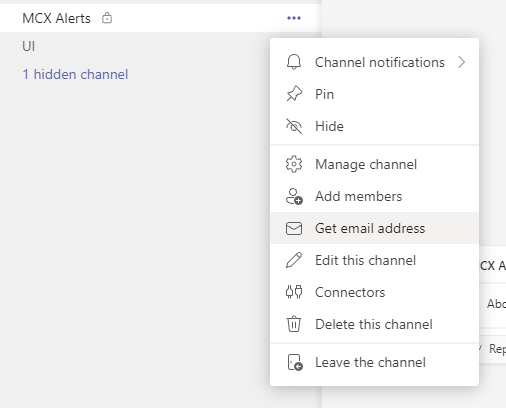
Right-click on the channel.
-
Click on "Get Email address".
-
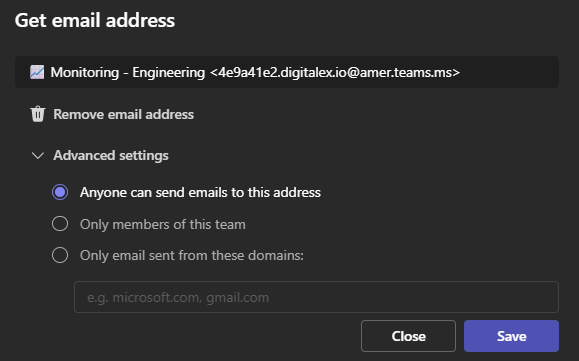
Select Anyone can send emails to this address & click save
-
Copy the email address inside the angle brackets and paste it into Mavvrik
Microsoft Teams Webhook
-
Create a new channel or use the existing channel.
-
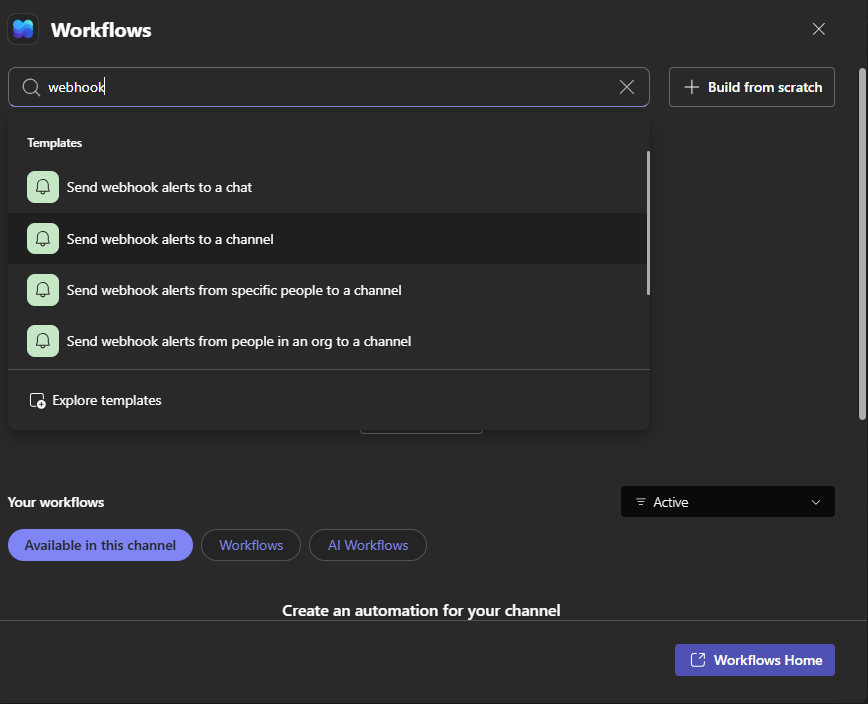
Right-click on the channel and select the "Workflows" option.
-
Search webhook and select Send webhook alerts to a channel.
-
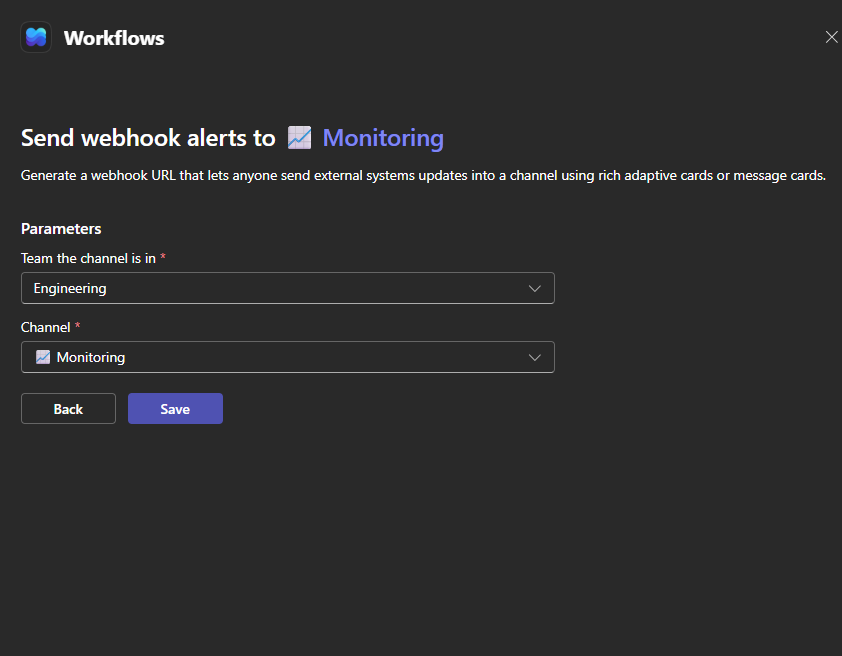
Click Save
-
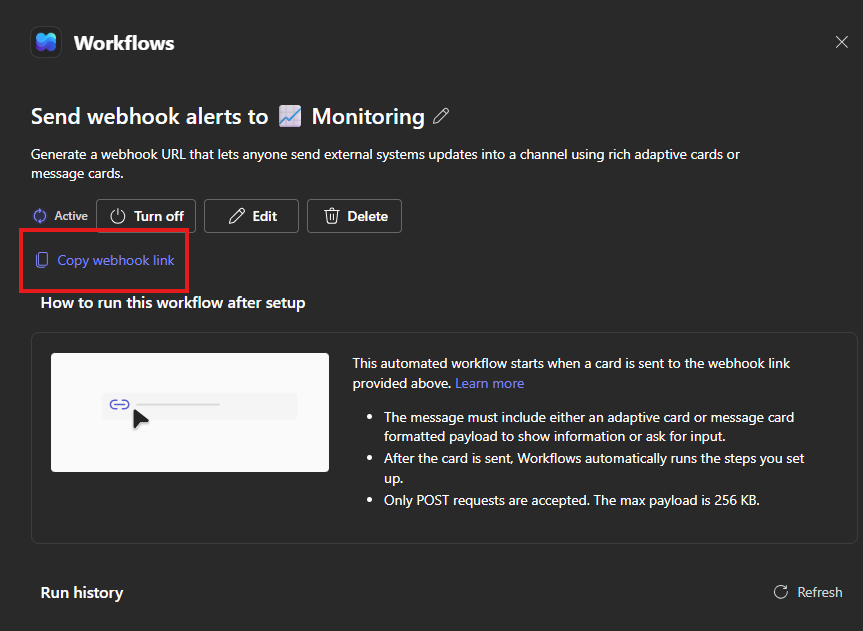
Copy webhook link and paste it in Mavvrik
What These Integrations Do
Both the email address and the webhook URL are just delivery destinations; Mavvrik posts an alert message to whichever one you provide whenever a configured trigger fires (budget threshold, anomaly, etc.). Neither method lets Mavvrik read anything from Teams; it's one-way, outbound only.
Worth deciding up front
The connector (webhook) or channel (email) is typically tied to whoever set it up. If that person leaves the org or loses channel access, alerts can silently stop. For a channel shared across the team, it's worth having a second owner aware of the setup, or documenting it wherever your team tracks integration ownership, rather than it living in one person's head.