.png)
When you create a shared cost at the segment level, it is distributed among the segments you selected, and the same applies to further segments.
Why this matters: think of a shared cost like a co-working space's Wi-Fi bill. No single desk caused the full router bill, but everyone benefits from it — so someone has to decide how to split that one line item fairly: evenly across everyone, by desk count, by actual bandwidth used, or by a custom agreement negotiated up front. Shared costs work the same way for infrastructure nobody owns outright — a shared Kubernetes cluster, a shared logging platform, or a pool of Reserved Instances — and the split method you choose determines who ends up paying for what.
This shows up differently depending on your role:
-
FinOps managers use the split methods (equal, proportional, custom, by-month) to fairly attribute infrastructure that no single team owns outright, instead of dumping it into an unallocated bucket nobody is accountable for.
-
Finance leaders want confidence that shared platform costs aren't silently inflating one team's number, or hiding in a corporate-overhead line that never gets reconciled.
-
Engineering and platform teams care most about RI/SP fair distribution specifically — so a team that heavily uses reserved capacity isn't quietly subsidized by a team that barely touches it.
Before you start: you'll need an existing segment (or root allocation) to attach the shared cost to, and an Owner or Editor role to create or manage it.
Shared Costs can be distributed across selected allocations using different split methods.
|
Split Method |
Description |
|---|---|
|
Share to All |
Distributes the shared cost across all selected allocations. |
|
Equal Split |
Divides the shared cost equally across selected allocations. |
|
Proportional Split |
Distributes cost based on each allocation's proportional cost or usage. |
|
Custom Split |
Allows users to define custom split percentages or ratios. |
|
By-Month Split |
Allows different split ratios for different months. |
Custom Split
Use Custom Split when specific allocation percentages are required.
Example:
|
Allocation |
Split % |
|---|---|
|
Team A |
50% |
|
Team B |
30% |
|
Team C |
20% |
The total split percentage should equal 100%.
By-Month Split
Use By-Month Split when shared cost distribution changes over time.
Example:
|
Month |
Team A |
Team B |
Team C |
|---|---|---|---|
|
January |
50% |
30% |
20% |
|
February |
40% |
40% |
20% |
|
March |
30% |
50% |
20% |
Shared Cost Validation
Mavvrik validates shared cost configuration before saving.
Common validations include:
|
Validation |
Description |
|---|---|
|
Required Fields |
Required fields such as name, source, target, date, or split method must be completed. |
|
Duplicate Filters |
Shared cost filters should not conflict with existing shared cost rules. |
|
Invalid Date Format |
Start and end dates must use the supported format. |
|
Split Total |
Custom split percentages should total 100%. |
|
Missing Target |
At least one target allocation should be selected. |
If validation fails, review the highlighted fields, correct the issue, and save again.
Duplicate Shared Cost Filters
If a shared cost rule uses the same or conflicting filters as another shared cost, Mavvrik may show a validation message.
To resolve this:
-
Review the source filters.
-
Compare them with existing shared cost rules.
-
Update the filter criteria to avoid overlap.
-
Save the shared cost again.
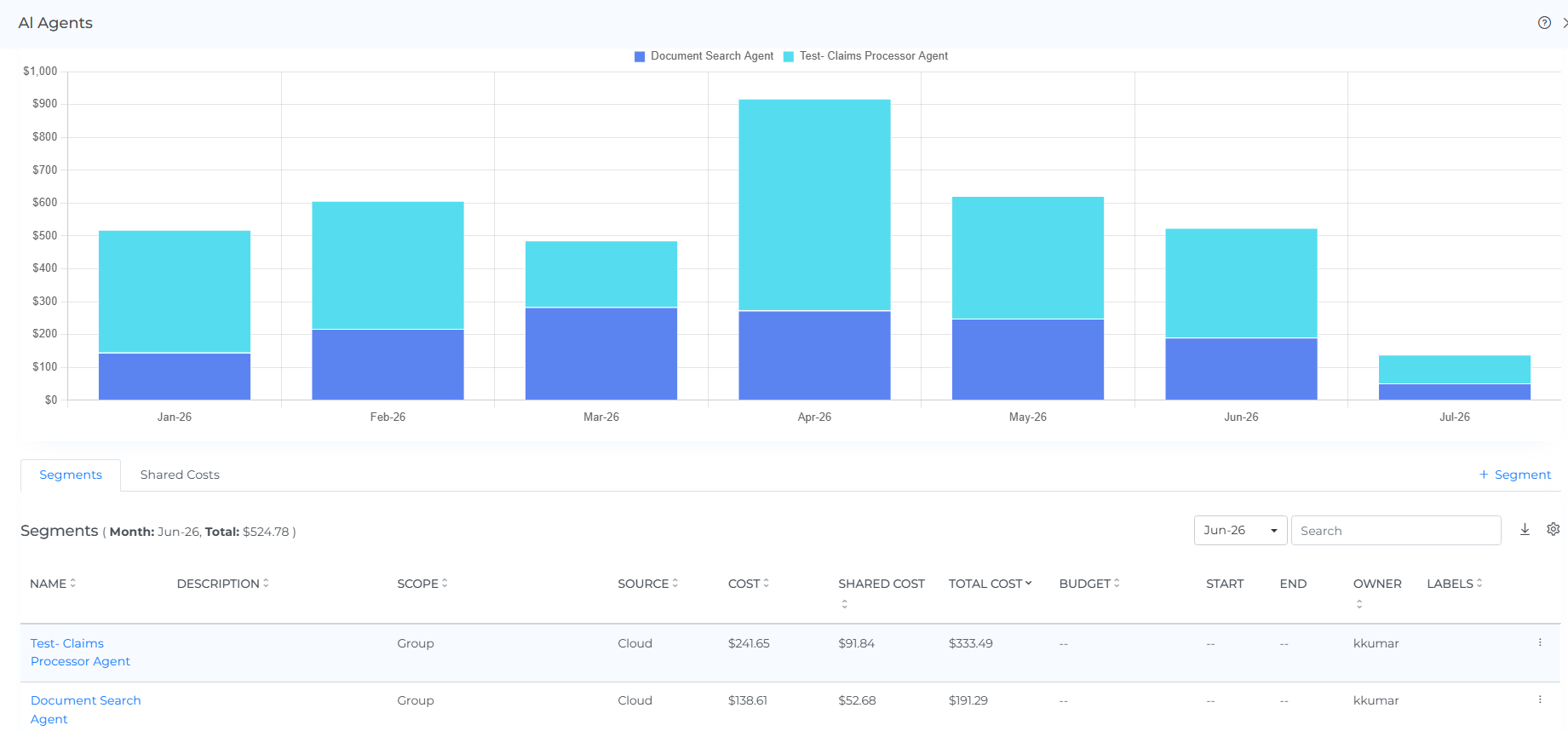
Steps to create shared cost
-
Click on cost allocation you wish to create the Shared cost
-
Click on the shared cost table
-
Click on the +shared cost link
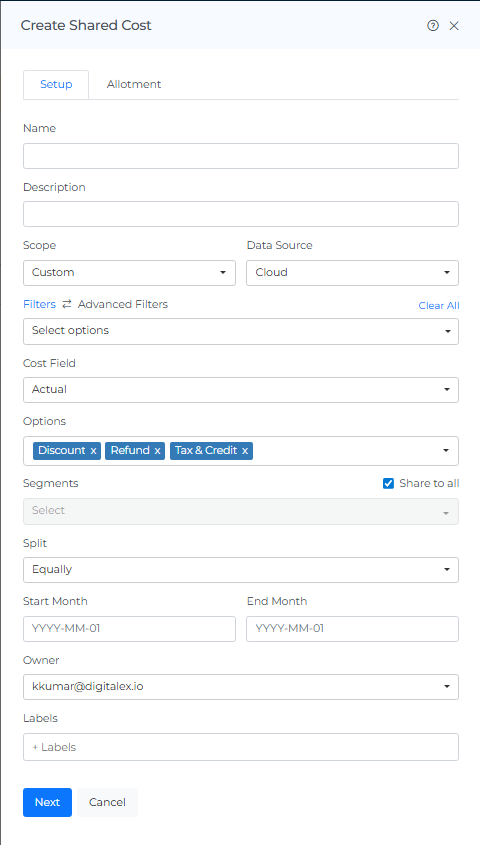
-
Enter name & description
-
Select scope like custom/manual entry/RI/SP
-
Custom: If you select custom, then you can choose the filter of your choice
-
Manual Entry: If you select manual entry, then you can input the cost or percentage i.e. what amount of cost you want to allocate to a particular Shared cost, and for the percentage you need to enter the amount of percentage you wish to inherit from the business/root allocation
-
RI/SP: When creating a Shared Cost at the Segment Level in Cost Allocation, users can select the scope as Reserved Instances/Savings Plans (RI/SP). This enables organizations to fairly distribute the cost of committed cloud resources across multiple business units, teams, or projects.
-
-
Select split like equally/proportionally/custom
-
Equally: if you select equally, then the shared cost will be split equally among the segments you selected
-
Proportionally: If you select proportionally, then the shared cost will be split proportionally among the segment you selected
-
Custom: If you select custom, then the shared cost will be split custom according to the percentage you have specified to segments by month-wise ( Note: Custom option is not visible if you select "share to all " check box)
-
Fair distribution: Fair Distribution ensures that the cost of Reserved Instances (RI) and Savings Plans (SP) is allocated fairly across segments based on actual usage patterns. Unlike Equal or Proportional splits, it considers factors such as usage duration, efficiency, and consumption trends to ensure a balanced cost allocation.
-
Key Highlights of RI/SP Fair distribution
-
Distributes RI/SP costs based on the used portion of commitment costs, rather than a fixed percentage.
-
Prevents underutilized segments from bearing excessive costs.
-
Encourages optimized reserved capacity usage by reflecting real consumption.
-
Use Fair Distribution when RI/SP usage varies significantly across segments, ensuring a balanced and justifiable cost split.
-
Any unused RI/SP cost is now separated at the root or parent segment level, making shared cost allocation more accurate, transparent, and easier to interpret.
-
Enter the start date and end date i.e. from which month you want to start the shared cost and until which month you want to see the shared cost ( note : the start date and end date should fall under the root/segment/unit allocation )
-
Select the owner of the shared cost
-
You can add the labels for shared cost
-
Click on Next
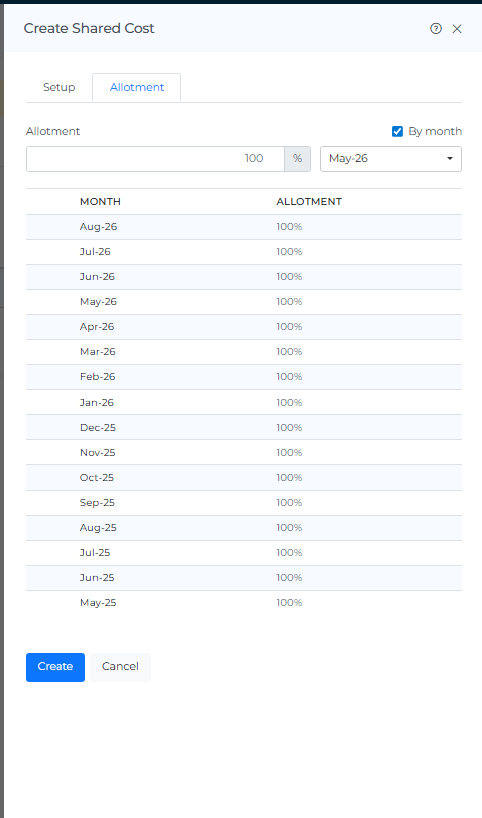
-
Enter the allotment you want to allot i.e., you can enter flat for all months or by month also
-
Click on create
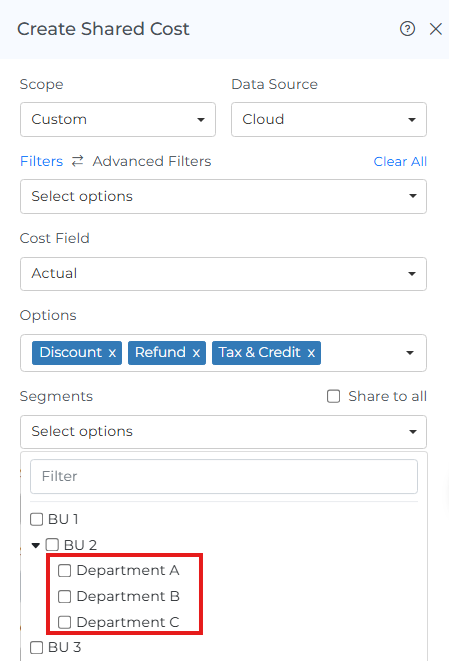
When creating a shared cost, you can now split it across multiple selected segments rather than the entire group. Expand a group to auto-discover its child segments and select only the ones you need, the shared cost is then distributed proportionally to each selected segment's cost.
Expired Shared cost
Cost Allocations feature in Mavvrik has "Expired" capability—giving you full control to edit the expired shared cost and reuse them if required by changing the shared cost dates.
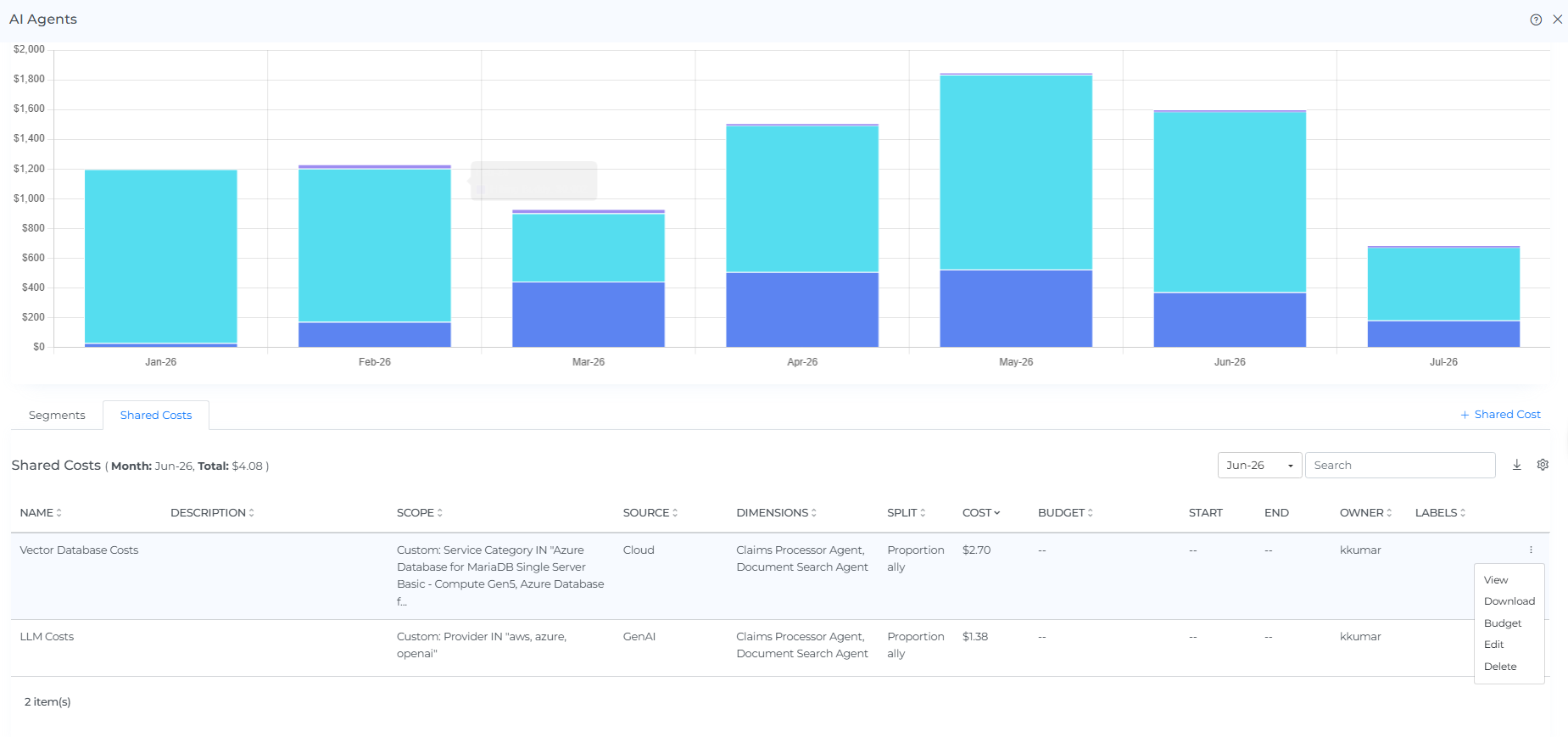
Row actions: View, Download, Edit, Delete
Each shared cost in the list has a row of actions available via icons — view, download, edit, and delete.
View
-
Click on view option
-
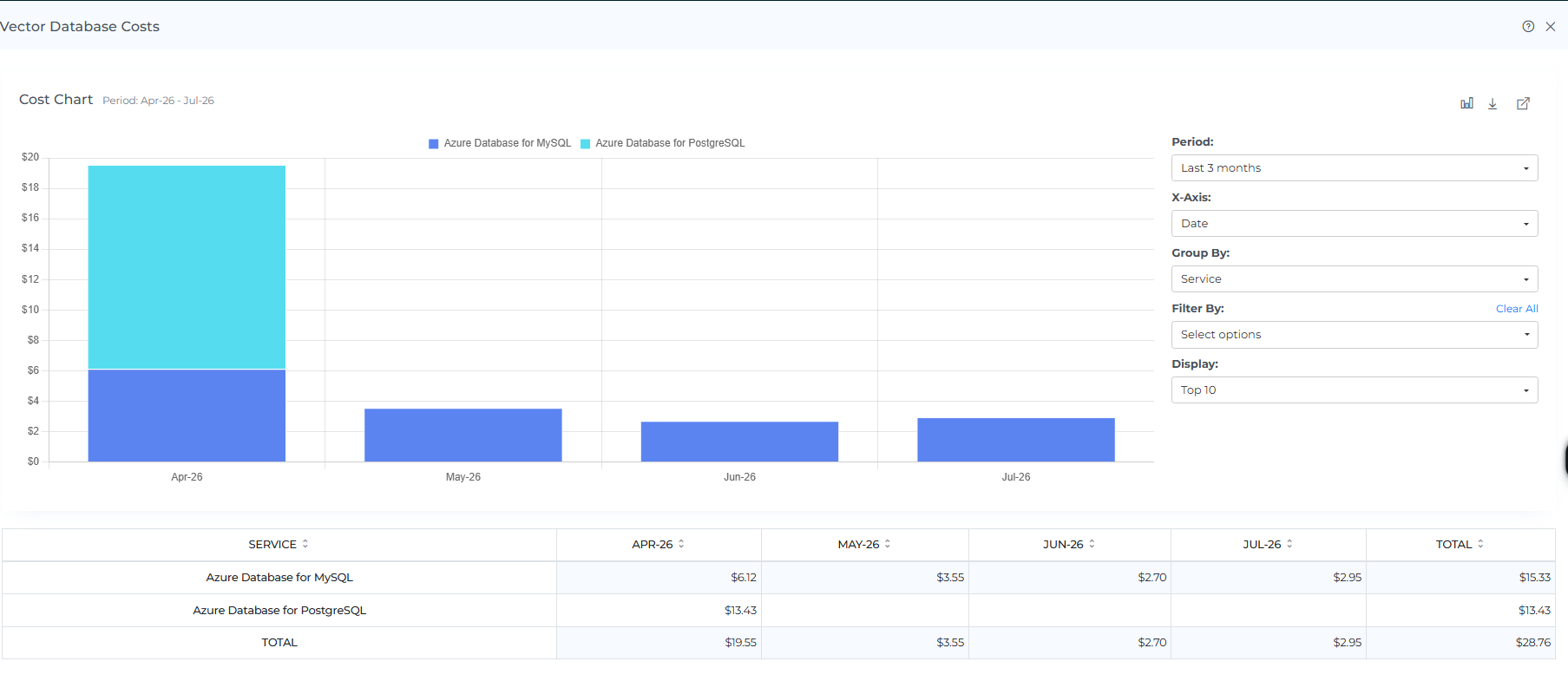
Preview will be displayed as shown above.
From this preview panel's toolbar, you can also: change the chart type, download the underlying chart data as a file, expand the chart to full screen, or open the same view in a separate dashboard.
-
To view in a separate dashboard, click on the view icon at the last
Download
-
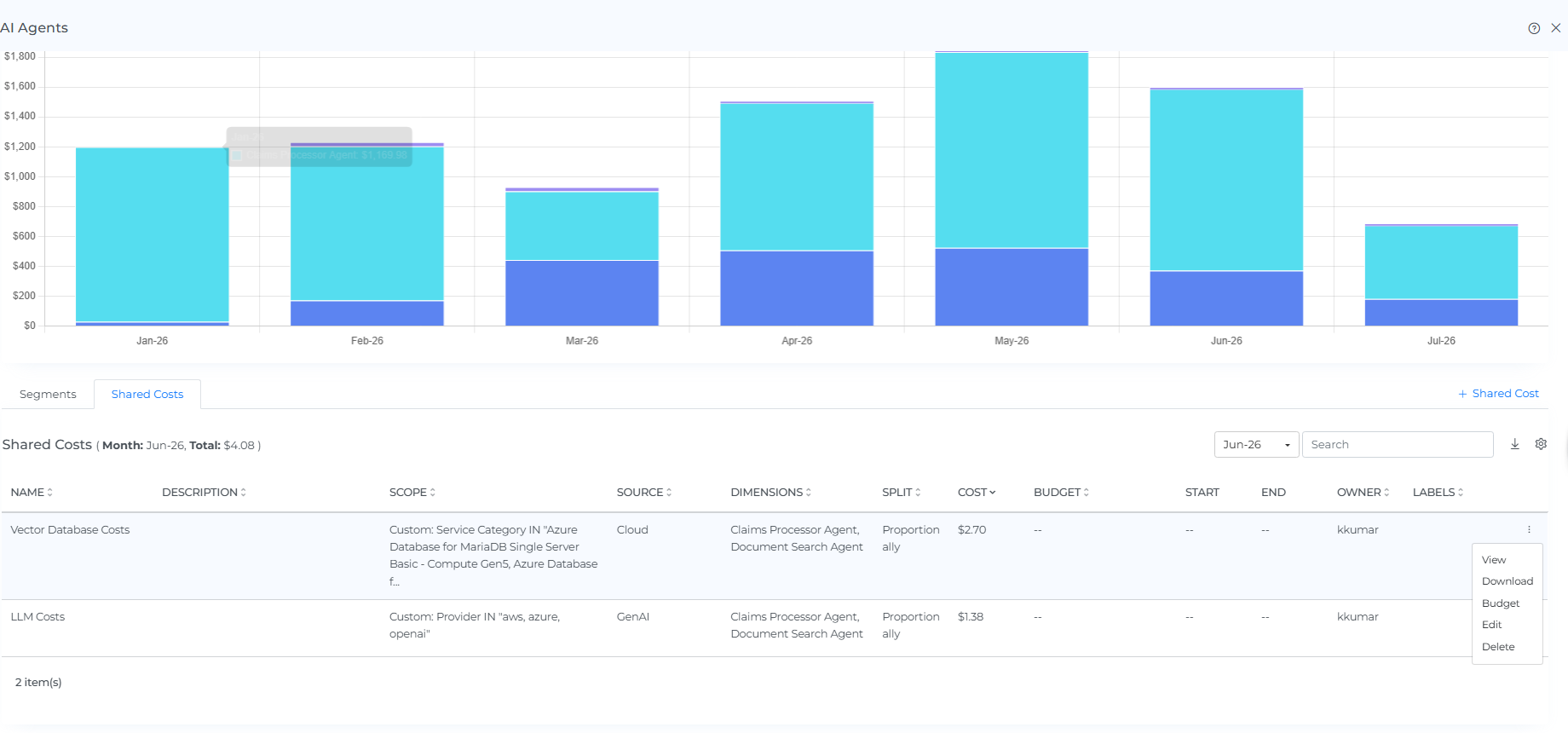
Click on the download option
-
On clicking the Download option the details of the segments will be downloaded in a CSV file
Edit
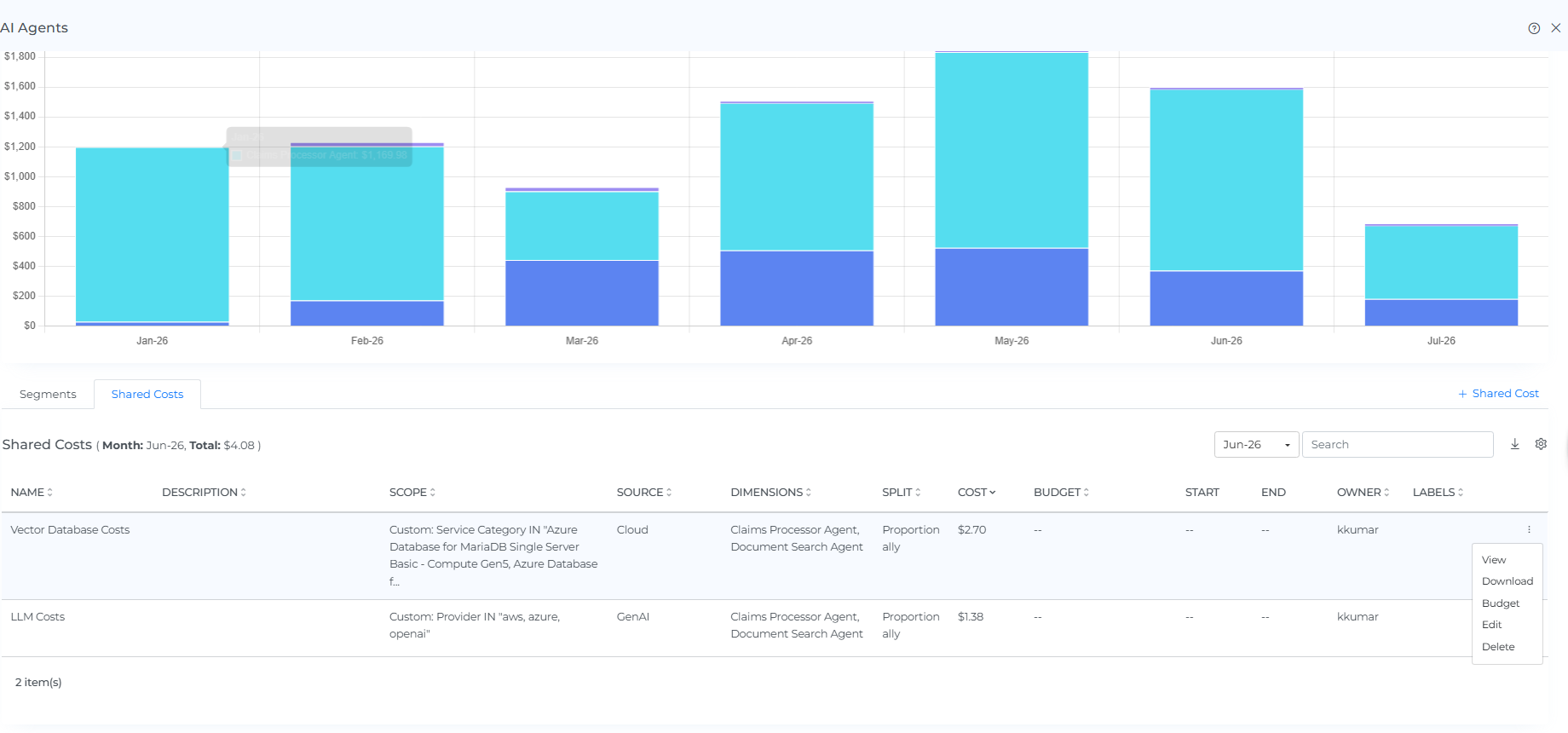
You can only edit name, description, split, owner, and budget amount for the existing segments
-
Click on the edit option
-
Edit the fields you wish to and click on update
Delete
-
Click on the delete option
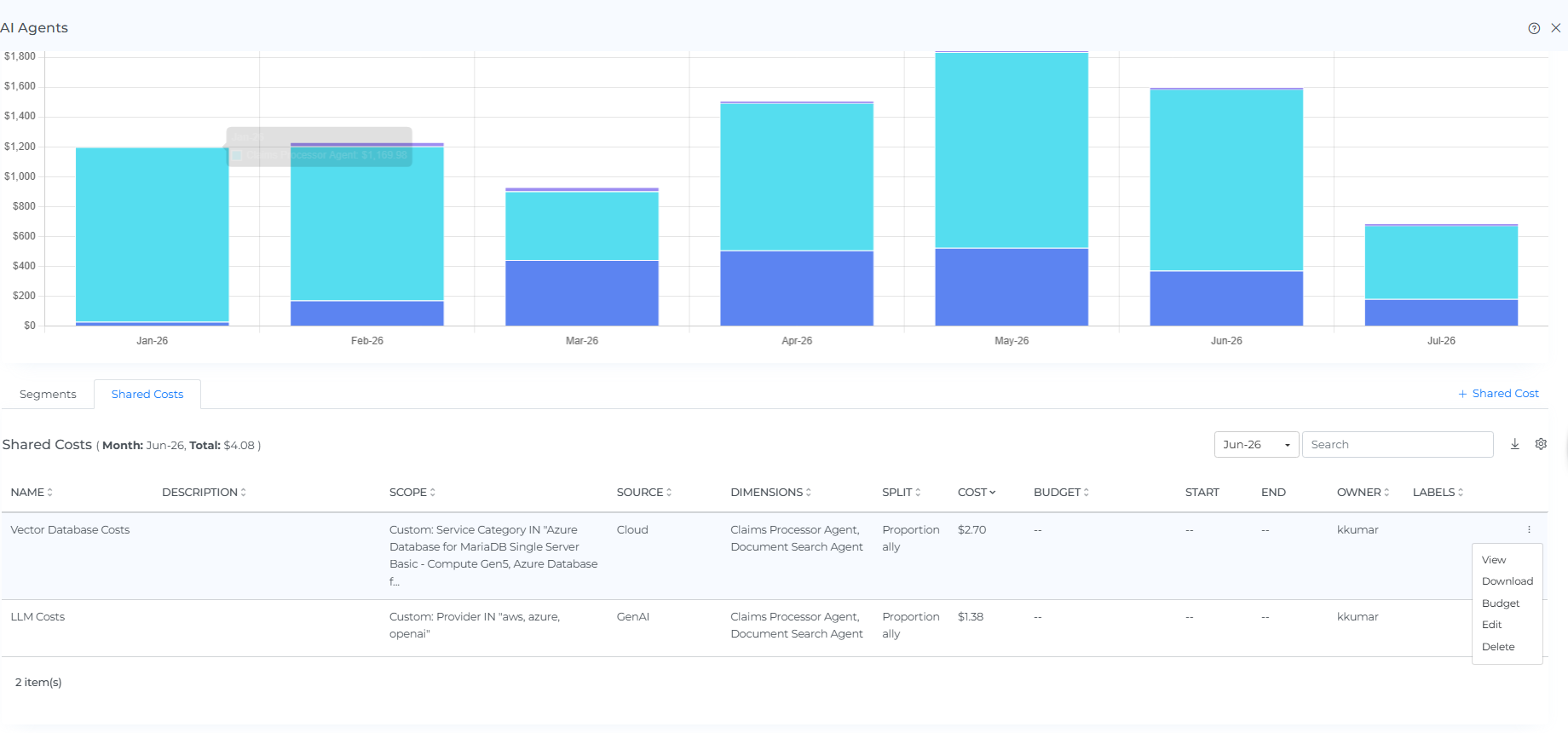
For budgets at the shared cost , use the Budget action the same way as described on the Cost Allocations Business page (see "Row actions: View, Download, Budget, Edit, Delete").